
Monday, March 30, 2026
The Three Kings - feat. 7^X "Black Wall Street"

 Founded in 2006 in Atlanta, GA, PeachTree Music Group is a multimedia entertainment leader specializing in music production, artist development, and global distribution. Our award winning team, led by CEO Antonio "TopcaT" Randolph, A&Rs Marquan Smith and Daimeial Michel, and Engineer Vertell Hightower, created & creates chart-ready content while upholding industry leading standards of integrity. Key Differentiators Platinum certified production team Strategic major label partnerships Full-service artist development Blockchain powered distribution via DAP.Direct, Specializing in hip-hop, R&B, and pop, PTMG has engineered content generating hundreds of millions to billions of streams, and has secured sync placements with Netflix, ESPN, and Fortune 500 brands. Our 360° Artist Ecosystem combines creative development with innovative technology solutions to build tomorrow's hitmakers. "Where artistry meets accountability."
Thursday, March 19, 2026
Maximizing Your 2026 Royalties: A Guide to SoundExchange for Independent Creators

Maximizing Your 2026 Royalties: A Guide to SoundExchange for Independent Creators
By Antonio ‘7opca7’ Randolph | March 19, 2026
As we’ve seen with the recent Copyright Royalty Board (CRB) rate determinations for 2026, the potential for revenue from digital performances is at an all-time high. With subscription streaming rates now sitting at $0.0032 per play, the difference between "leaving money on the table" and "building equity" comes down to one thing: Accurate Registration.
For independent artists, producers, and label owners, understanding how to claim these statutory rates is no longer optional—it is a business imperative.
1. The SoundExchange Mandate
Unlike BMI, ASCAP, or SESAC (which collect for songwriters), SoundExchange is the sole organization designated by the U.S. government to collect and distribute digital performance royalties for featured artists and sound recording copyright owners (SRCOs).
If your music is played on SiriusXM, Pandora, iHeartRadio, or any of the thousands of non-interactive webcasters, SoundExchange is holding your money.
2. The 2026 Registration Checklist
To ensure you are receiving the full benefit of the new 2026 rates, follow this professional workflow:
Dual Registration: Register as both the Featured Artist and the Rights Owner (if you own your masters). SoundExchange splits payments 50/45/5 (Artist/Owner/Non-featured musicians). If you are independent, you are entitled to 95% of the total payout.
ISRC Precision: Ensure every track has a unique International Standard Recording Code (ISRC). In 2026, metadata mismatches are the #1 cause of "black box" royalties—money that sits uncollected because the system can't find the owner.
International Reciprocity: SoundExchange has agreements with foreign collecting societies. Ensure your account is set up to collect your Neighboring Rights royalties from international plays in territories like the UK, France, and Germany.
3. The "Letter of Direction" (LOD) for Producers
In the modern era, producers are often cut out of digital performance royalties because SoundExchange’s mandate is technically for "performers."
Pro-Tip: As an architect of the sound, ensure your contracts include a Letter of Direction (LOD). This allows the featured artist to direct a percentage of their royalties (typically 2–3 points) directly to you through SoundExchange.
4. Why the 2026 Rates Matter Now
The shift from the $0.0023 rate in 2018 to the $0.0032 rate today may seem small per play, but at scale, it is a 39% increase in gross revenue. For a catalog with 1,000,000 digital radio spins, that is a difference of thousands of dollars in compounding revenue.
The Bottom Line
In my work with Big-N-Mage Publishing, we often say: “Music without ownership is noise. Music with structure is power.” The CRB has done the work of raising the rates. Now, it is your job to build the infrastructure to collect them. Don't let your hard-earned royalties sit in a digital vault. Register, document, and defend your assets.
The 2026 Royalty Cheat Sheet
Who Collects Your Money?
| Royalty Type | Source | Who Collects It? | Who Gets Paid? |
| Performance (Composition) | Radio, TV, Venues, Streaming (Spotify/Apple) | PROs (ASCAP, BMI, SESAC) | Songwriters & Publishers |
| Mechanical (Composition) | Digital Streams, Physical Sales, Downloads | The MLC (Mechanical Licensing Collective) | Songwriters & Publishers |
| Digital Performance (Master) | Non-Interactive (SiriusXM, Pandora, Webcasts) | SoundExchange | Featured Artists & Label Owners |
| Streaming Royalties (Master) | Interactive Streams (Spotify, Apple, Tidal) | Distributors (DistroKid, Tunecore, Orchard) | Label Owners / Master Owners |
| Sync Licensing | Film, TV, Ads, Video Games | Direct Contracts (Negotiated by your Publisher) | Both (Songwriter & Master Owner) |


The "Composition vs. Master" 2026 Royalty Infographic
Founded in 2006 in Atlanta, GA, PeachTree Music Group is a multimedia entertainment leader specializing in music production, artist development, and global distribution. Our award winning team, led by CEO Antonio "TopcaT" Randolph, A&Rs Marquan Smith and Daimeial Michel, and Engineer Vertell Hightower, created & creates chart-ready content while upholding industry leading standards of integrity. Key Differentiators Platinum certified production team Strategic major label partnerships Full-service artist development Blockchain powered distribution via DAP.Direct, Specializing in hip-hop, R&B, and pop, PTMG has engineered content generating hundreds of millions to billions of streams, and has secured sync placements with Netflix, ESPN, and Fortune 500 brands. Our 360° Artist Ecosystem combines creative development with innovative technology solutions to build tomorrow's hitmakers. "Where artistry meets accountability."
From 2018 - 2026 "The New Standard for Digital Performance"
Copyright Royalty Board 2026 Rate Determination: The New Standard for Digital Performance

By 7opca7 | March 19, 2026
The Copyright Royalty Board (CRB) has finalized the 2026 cost-of-living adjustments (COLA) for master recording copyright holders and non-commercial webcasters. These updates reflect the final phase of the Web V rate period and account for the inflationary pressures that have reshaped the music economy since the landmark 2017 determinations.
Streaming Rate Comparison: 2018 vs. 2026
The CRB continues to adjust rates based on the Consumer Price Index (CPI), resulting in a steady climb for per-performance royalties.
| Service Type | 2018 Rate | 2026 Rate (Projected/Set) |
| Commercial Subscription | $0.0023 | $0.0032 |
| Commercial Ad-Supported | $0.0018 | $0.0026 |
The Difference: In 2018, the industry saw a modest "basis point" increase. By 2026, the cumulative impact of inflation and the transition from the Web IV to the Web V era has pushed subscription rates up by nearly 39% compared to eight years ago. This shift reflects the CRB’s commitment to ensuring that master recording owners, labels and independent artists, keep pace with the rising costs of digital infrastructure and living expenses.
Non-Commercial Webcasters
For 2026, non-commercial webcasters will pay $0.0026 per performance for all transmissions in excess of 159,140 aggregate tuning hours (ATH) per month.
Then (2018): The rate was $0.0018.
Now (2026): The rate has matched the commercial ad supported tier, closing the gap that existed in the late 2010s and simplifying the royalty landscape for mid to large non commercial stations.
Mechanicals and Sirius-XM
While your original article anticipated a "slate of determinations," 2026 finds the industry operating under the matured Phonorecords IV agreement.
Mechanical Royalties: Songwriters and publishers are now benefiting from a headline rate of 15.35% of total service revenue, a significant jump from the 11.4% rate that was being fought for in late 2017.
Satellite Radio: SiriusXM and Music Choice rates, which were once negotiated in isolation, are now more closely aligned with the "willing buyer/willing seller" standard, significantly increasing the payout to SoundExchange for featured artists.
Satellite Television Retransmission
Beyond music, the 2% COLA mentioned in 2017 has evolved into a more aggressive adjustment period.
Private Home Viewers: The rate has risen from the 2018 mark of 28 cents to 34 cents per subscriber per month.
Commercial Establishments: The rate for commercial viewers has climbed from 58 cents to 71 cents per subscriber per month.
The 2026 Perspective
In 2017, the industry was focused on "basis points." In 2026, the conversation has shifted toward Total Royalty Optimization. With the integration of AI-tracking and blockchain based distribution (technologies Mr. Randolph and firms like Big-N-Mage are currently championing), the accuracy of these collections is higher than ever before. While the rates have increased, the primary challenge in 2026 remains the "metadata gap" ensuring that these higher rates actually reach the pockets of the correct rights holders.
 Founded in 2006 in Atlanta, GA, PeachTree Music Group is a multimedia entertainment leader specializing in music production, artist development, and global distribution. Our award winning team, led by CEO Antonio "TopcaT" Randolph, A&Rs Marquan Smith and Daimeial Michel, and Engineer Vertell Hightower, created & creates chart-ready content while upholding industry leading standards of integrity. Key Differentiators Platinum certified production team Strategic major label partnerships Full-service artist development Blockchain powered distribution via DAP.Direct, Specializing in hip-hop, R&B, and pop, PTMG has engineered content generating hundreds of millions to billions of streams, and has secured sync placements with Netflix, ESPN, and Fortune 500 brands. Our 360° Artist Ecosystem combines creative development with innovative technology solutions to build tomorrow's hitmakers. "Where artistry meets accountability."
Brilliant Handz Music
7opca7


Brilliant Handz Music

Music Production Duo
Brilliant Handz Music is a versatile music production duo featuring the expertise of skilled producers and arrangers Arty and Doosta. Their sound is defined by a fearless approach to experimentation, blending diverse elements from classical, rock, trance, hip-hop, and beyond. With extensive experience in contemporary R&B, Rap, Pop, and Alternative styles, they focus on innovative mixing and unique soundscapes.
The Team
Artur Yurevich Soldaev (Arty) – Russian
Maxim Alexandrovich Ivanik (Doosta) – Russian
Antonio "7opca7" Randolph – American
Specialties
Music Production
Multi-Genre Arrangement (R&B, Hip-Hop, Trance, Rock, Experimental)
Official Links & Contact
Website:
www.brillianthandzmusic.com Twitter:
@brillianthandz @7opca7 Latest Video:
Watch on YouTube
Business Inquiries: Please direct all production requests and business questions exclusively to the official contacts listed on the website. Note: Business messages sent via Soundclick Personal Message may not be monitored.

7opca7 - The Digital Maestro
Founded in 2006 in Atlanta, GA, PeachTree Music Group is a multimedia entertainment leader specializing in music production, artist development, and global distribution. Our award winning team, led by CEO Antonio "TopcaT" Randolph, A&Rs Marquan Smith and Daimeial Michel, and Engineer Vertell Hightower, created & creates chart-ready content while upholding industry leading standards of integrity. Key Differentiators Platinum certified production team Strategic major label partnerships Full-service artist development Blockchain powered distribution via DAP.Direct, Specializing in hip-hop, R&B, and pop, PTMG has engineered content generating hundreds of millions to billions of streams, and has secured sync placements with Netflix, ESPN, and Fortune 500 brands. Our 360° Artist Ecosystem combines creative development with innovative technology solutions to build tomorrow's hitmakers. "Where artistry meets accountability."
Wednesday, January 14, 2026
7opca7

Antonio 7opca7 Randolph
Atlanta, GA 30326
618-799-3583 | AntonioTopcaT@gmail.com | linkedin.com/in/antoniotopcatrandolph | @7opca7
Professional Summary
Marketing Product Manager and AI Consultant with 15+ years of experience driving multimillion-dollar campaigns in entertainment and corporate sectors. Expert in AI integration, digital strategy, and brand growth, delivering RIAA-certified projects and scalable results through data-driven solutions.
Core Competencies
AI & Technology Integration | Strategic Marketing | Project Management
Publishing & Distribution | Technical Proficiency
Professional Experience
Digital Alliance Platform (Remote) — Digital Distribution Worldwide
7^X Global Music
Big-N-Mage Publishing
Founded in 2006 in Atlanta, GA, PeachTree Music Group is a multimedia entertainment leader specializing in music production, artist development, and global distribution. Our award winning team, led by CEO Antonio "TopcaT" Randolph, A&Rs Marquan Smith and Daimeial Michel, and Engineer Vertell Hightower, created & creates chart-ready content while upholding industry leading standards of integrity. Key Differentiators Platinum certified production team Strategic major label partnerships Full-service artist development Blockchain powered distribution via DAP.Direct, Specializing in hip-hop, R&B, and pop, PTMG has engineered content generating hundreds of millions to billions of streams, and has secured sync placements with Netflix, ESPN, and Fortune 500 brands. Our 360° Artist Ecosystem combines creative development with innovative technology solutions to build tomorrow's hitmakers. "Where artistry meets accountability."
Wednesday, April 23, 2025
About: Digital Alliance Platform
https://linqapp.com/distr_support/

The Future of Music Commerce: Inside the DAP.Direct Revolution
The music industry is at a crossroads. While streaming has democratized listening, the backend—the way artists get paid and retain their rights—has remained a "black box" of confusion and delayed royalties.
Enter DAP.Direct (Digital Alliance Platform). Founded by industry visionary Antonio "TopcaT" Randolph, DAP.Direct isn’t just another distribution tool; it is a high-fidelity SaaS ecosystem designed to put the power back into the hands of the creators.
Empowering the Architect: The DAP.Direct Core
At its heart, DAP.Direct solves the two biggest problems in modern music: Transparency and Speed. By leveraging blockchain-verified royalty payments (powered by Platinum Digital’s patented system), we ensure that the "Digital Maestro" of today is paid accurately and instantly.
The 4-Pillar System
Our technology is built on a foundation of four strategic strengths designed for both major labels and elite independent creators:
Global Distribution Network: We sync your sound to over 200+ DSPs—including Spotify, Apple Music, and TikTok—with automated metadata optimization to ensure you’re found, not just heard.
Advanced Rights Management: Whether it’s territory-specific ownership or complex asset-type splits, our platform manages the "legal blueprints" of your music across mobile and desktop.
Royalty Intelligence: Powered by Smart Contracts, we process payments in real-time. No more waiting six months for a check; the money moves when the music does.
Data Analytics Suite: Move beyond basic play counts. Our suite offers predictive sync placement scoring, telling you which tracks are most likely to land that next major film or TV deal.
Strategic Services for the 2026 Liftoff
DAP.Direct goes beyond the upload button. We offer a full-stack partnership for the modern executive:
Catalog Acquisitions: We help legacy artists monetize their history for the digital age.
Label Partnerships: From the first beat in the studio to global distribution, we provide end-to-end support.
Legal FinTech: Our AI-driven contract review ensures your rights are fortified before you ever hit "submit."
"We are democratizing music commerce through transparent, creator-first technology. It’s time to challenge the old guard and build an ecosystem where the artist’s equity is the priority." — Antonio Randolph, Founder & CEO
The Leadership Behind the Movement
The strength of the platform is mirrored in the expertise of its architects:
Antonio Randolph (Founder/CEO): 15+ years of music-tech innovation.
Michael S. Romero (CTO): The mastermind behind our blockchain architecture.
Vertell Hightower (Audio Engineer): Setting the gold standard for Quality Control.
Jeremy Cosby (VP Distribution): Streamlining global platform operations.
Take Control of Your Narrative
The era of the "starving artist" is over. The era of the Digital Maestro has begun. Are you ready to synthesize your creative soul with the industry’s most advanced distribution technology?
Start Your Onboarding:

Founded in 2006 in Atlanta, GA, PeachTree Music Group is a multimedia entertainment leader specializing in music production, artist development, and global distribution. Our award winning team, led by CEO Antonio "TopcaT" Randolph, A&Rs Marquan Smith and Daimeial Michel, and Engineer Vertell Hightower, created & creates chart-ready content while upholding industry leading standards of integrity. Key Differentiators Platinum certified production team Strategic major label partnerships Full-service artist development Blockchain powered distribution via DAP.Direct, Specializing in hip-hop, R&B, and pop, PTMG has engineered content generating hundreds of millions to billions of streams, and has secured sync placements with Netflix, ESPN, and Fortune 500 brands. Our 360° Artist Ecosystem combines creative development with innovative technology solutions to build tomorrow's hitmakers. "Where artistry meets accountability."
Thursday, March 6, 2025
‘7opca7’: Redefining the Future of Hip-Hop, Music Management Consulting, and Digital Distribution Innovation

Antonio 7opca7: The Architect of Southern Hip-Hop & Digital Distribution
Antonio 7opca7 is a visionary leader and trailblazer in the music industry, renowned for his transformative impact on the Southern hip-hop scene and his pioneering role in the digital distribution revolution. As the President and CEO of his esteemed management and consulting firm, 7opca7 has consistently demonstrated an unparalleled ability to navigate the rapidly evolving dynamics of the music business.
His unique blend of sharp business acumen, cultural insight, and technological innovation has positioned him as the driving force behind the success of numerous chart topping, platinum selling artists.
A Legacy of Genre / Defining Movements
7opca7’s leadership was instrumental in the rise of groundbreaking cultural movements including Crunk, Snap, and Swag which redefined hip-hop and influenced global music trends. These were not merely sub genres; they were cultural phenomena that reshaped fashion, language, and lifestyle.
Crunk: 7opca7 helped migrate this high energy Southern sound into the global mainstream.
Snap & Swag: He identified and amplified these movements, establishing his clients as cultural icons rather than just recording artists.
His expertise extends across the entire music ecosystem production, distribution, and marketing ensuring his clients thrive both creatively and commercially in an increasingly competitive landscape.
DAP.Direct: Pioneering the Digital Frontier
In 2024, 7opca7 solidified his legacy by launching DAP.Direct (Digital Alliance Platform). This cutting-edge initiative is designed to revolutionize how music is distributed and monetized in the digital age.
| Feature | Impact on the Industry |
| AI-Driven Analytics | Provides real-time data on audience engagement and streaming trends for smarter marketing. |
| Blockchain Transparency | Ensures immutable records for royalty distribution, solving long-standing fairness issues. |
| Smart Contracts | Automates payment processes, reducing errors and administrative disputes. |
| Global Reach | Empowers independent artists and labels to maximize visibility without traditional gatekeepers. |
"The digital age has democratized the music industry, but it has also created new challenges. My goal with DAP.Direct is to empower artists to take full control of their careers." Antonio 7opca7

Strategic Expertise & Specializations
7opca7’s management philosophy is rooted in career sustainability. He does not just "shape stars"; he builds infrastructure for long term success through:
Artist Development: Cultivating global stardom while maintaining artistic integrity.
Distribution Innovation: Leading the shift from traditional models to tech-driven platforms.
Strategic Consulting: Offering actionable insights for production and monetization.
High-Stakes Negotiation: Securing lucrative deals across all entertainment verticals.
Technology Integration: Leveraging AI and data to optimize artist trajectories.
Solving Modern Industry Challenges
While many struggle to adapt to declining physical sales and market over saturation, 7opca7 views these as opportunities for innovation.
Transparency: By using blockchain, DAP.Direct provides a "trust less" system where artists can track every cent in real time.
Market Noise: Through AI-driven target marketing, he helps artists cut through the millions of songs released annually to find their specific "super fans."
Future-Proofing: He is currently exploring Virtual Reality (VR) concerts and Augmented Reality (A&R) experiences to redefine the live music experience.
2026 and Beyond: The Legacy of Innovation
Antonio 7opca7 continues to redefine the boundaries of music management and global culture. From his foundational years shaping the Southern hip-hop sound to his current tenure as a digital distribution pioneer, his journey remains a testament to the power of relentless ambition. As the industry evolves, his influence grows, ensuring that the next generation of creators possesses the tools, the technology, and the strategy to reach global audiences like never before.
The vision for 7^X Global Music and DAP.Direct is rooted in a "Global Music is Global Culture" philosophy. By merging high level artist development with technical infrastructure, 7opca7 is not just navigating the future, he is architecting it.
Democratic Distribution: Removing barriers to entry for independent labels and creators through transparent, blockchain-backed systems.
AI-Enhanced Strategy: Moving beyond intuition to provide artists with the data-driven insights necessary to conquer international markets.
Cultural Preservation: Ensuring that even as technology advances, the soul and authenticity of the music remain at the forefront.
Through the intersection of TIME 2 SYNTHESIZE and his various publishing ventures, 7opca7 is creating a self sustaining ecosystem where creativity is protected, and global reach is the standard. He remains a standout executive shaping the future of entertainment in 2026 and far beyond.

A Forward - Looking Vision for the Music Industry
Founded in 2006 in Atlanta, GA, PeachTree Music Group is a multimedia entertainment leader specializing in music production, artist development, and global distribution. Our award winning team, led by CEO Antonio "TopcaT" Randolph, A&Rs Marquan Smith and Daimeial Michel, and Engineer Vertell Hightower, created & creates chart-ready content while upholding industry leading standards of integrity. Key Differentiators Platinum certified production team Strategic major label partnerships Full-service artist development Blockchain powered distribution via DAP.Direct, Specializing in hip-hop, R&B, and pop, PTMG has engineered content generating hundreds of millions to billions of streams, and has secured sync placements with Netflix, ESPN, and Fortune 500 brands. Our 360° Artist Ecosystem combines creative development with innovative technology solutions to build tomorrow's hitmakers. "Where artistry meets accountability."
Thursday, January 30, 2025
Spotify is now going to pay a higher royalty rate to Universal Music Publishing Group


The news broke this past Sunday that Universal Music Group and Spotify have struck a new, multi-year licensing deal.
+Read this (and comment) on aristake.com
+Share this on Instagram @aristake_
The main takeaway is that Spotify is now going to pay a higher royalty rate to Universal Music Publishing Group for mechanical royalties. Theoretically higher than Spotify is going to pay any other songwriter or publisher.
Let’s back up and put this all into context.
When Spotify initially launched way back in 2008, the music industry was in a death spiral. CD sales were plummeting. iTunes sales were not making much of a dent in the piracy ravaging the industry. Spotify, it seemed, could present a legal alternative to the piracy and a pathway to recovery. However, Spotify needed the major labels to gain access to the most popular music in the world to power the platform.
The major labels licensed their full catalogs to Spotify, but made sure the agreements were on their terms and that they made out just fine no matter what. Spotify paid the majors massive advances (with no requirement that any of that money trickle down to their artists). The majors got equity in Spotify (collectively around 18% - which is now below 7% after cashing out shares in the hundreds of millions of dollars), lots of kick-backs in the form of free advertising on the platform, and most egregious of all, higher royalty rates than indie labels and artists got.
The big myth of the streaming era is that all streams are created equally.
Even though per-stream pay has been estimated, there is no such thing as a per-stream rate. And even though a simplified explanation of how streaming currently pays via the pro-rata model that Spotify utilizes, goes something like: artists & labels make the proportionate amount of money equal to the proportionate amount of streams they get versus all other streams on the platform. It’s not even that simple.
This payment model also establishes the variance of payments by explaining that streams that come from paid subscribers will pay more than streams that come from free users. And streams from users on cheaper plans (like family plans, or in countries with a lower subscription cost) also earn less.
But even all that isn’t the full truth.
See, one UMG stream is going to earn more than one indie artist stream. From the identical listener. Why? Because every label and distributor negotiates their rates directly with Spotify. And with strict NDAs included in every licensing deal, we may never know what these rates are and which label or distributor gets paid the most.
But you better believe that UMG is going to make damn sure that they get the highest rates in the industry.
Just like they did with Sunday’s deal.
Now when it comes to publishing, however, the majority of the royalties are based on a transparent statutory rate (set by the US Copyright Royalty Board), and paid out via the government-mandated collection organization, the MLC (for mechanical royalties). And the other publishing royalties are paid out via Performing Rights Orgs like ASCAP, BMI, SESAC, GMR (for performance royalties). And then these orgs pay songwriters and publishers.
However, some publishers can opt out of these compulsory agreements and strike direct deals with Spotify and other DSPs.
Which UMG just did.
Spotify took a lot of flack last year for announcing it was going to be paying publishers and songwriters an estimated $150 million less in royalties in just the first year because it was reclassifying its premium subscriptions as a “bundle” since adding audiobooks. Thanks to a celebrated agreement between the NMPA (the organization representing publishers) and DiMA (the org representing streamers), the mechanical royalty rate is reduced for bundled tiers. (The MLC sued Spotify over this, stipulating that this bundle reclassification was “unlawful,” but just lost that case.)
UMG has now skirted this loophole that Spotify exploited.
In the press release, UMG CEO Lucian Grainge stated, “This agreement furthers and broadens the collaboration with Spotify for both our labels and music publisher, advancing artist-centric principles to drive greater monetization for artists and songwriters, as well as enhancing product offerings for consumers.”
He continues to push this “artist-centric” doublespeak that he coined a couple years ago while laying the groundwork for indie artist theft. There is absolutely nothing artist-centric about any of the initiatives UMG has pushed onto the industry recently.
WIthholding pay from poorer artists to give to richer artists isn’t artist-centric. Penalizing indie artists when their songs get botted, isn’t artist-centric. Striking deals with generative AI music companies that flood Spotify with AI generated music, pulling royalties away from human artists and songwriters, is not artist-centric.
We can safely assume that anything UMG states as “artist-centric” is in actuality, label-centric. Or more aptly, UMG-centric.
And now, Spotify is attempting to overshadow this clear royalty manipulation in favor of the largest music corporation in the world valued at over $50 billion, by announcing it paid the music industry $10 billion in 2024.
In the press release, it also states “Today, well over 10,000 artists generate over $100,000 per year from Spotify alone. That's a beautiful thing.”
But now we know we can’t take anything Spotify says at face value. As revealed in immense detail in Liz Pelly’s new book Mood Machine (and initially excerpted in her Harper’s piece), Spotify has been filling its extremely popular official editorial playlists with low-cost, royalty-free music from stock-music companies (sometimes AI-generated), with the goal of paying fewer royalties to working artists: intentionally replacing real artists on these high-trafficked playlists with “ghost” artists that don’t actually exist.
This makes Spotify’s stock price go up, all while artist pay goes down.
I get it. We live in a capitalist society. And Spotify and UMG are beholden to their shareholders. Their goal is to make more money at any cost. Artists be damned.
But when the CEO of the largest music streaming platform in the world is worth more than the 4 richest musicians combined, all while continually undercutting the hard-working musicians and songwriters that power his platform, it’s time we stop pretending the game is fair.
So, what are we to do?
Taking your music off of Spotify ain’t a realistic solution when that’s how the majority of the listening public prefer to listen to music (and without a coordinated effort from every artist - many of whom are beholden to their labels - it won’t move the needle).
Not to mention, Spotify is the only DSP actively promoting concerts (with ticket links) and offering commission-free merch. I will absolutely give credit where credit is due.
Apple Music, TIDAL, and Amazon Music are also owned by billionaires and similarly pay on the same pro-rata payment model. People mistakenly claim that “TIDAL pays more!” or “Amazon Music pays the most!” This is not true.
There isn’t an artist on planet earth that has made more money from TIDAL or Amazon Music than from Spotify.
The only reason their “per stream rate” (which, remember, ISN’T A THING) is because they have so few users.
Would you rather make more of less or less of more?
Government intervention seems to be the only way to make the streaming landscape fair. To require that every stream is treated equally. Make direct licensing illegal. Undo the licensing NDAs so we have transparency.
Even though there was a bill introduced to the US House last year, The Living Wage For Musicians Act, (thanks to immense advocacy work by the UMAW), which has some great stuff in it, it hasn’t moved past the introduction stage. And seems unlikely it will.
I think we can advocate for a more fair music industry, while simultaneously, as Talib Kweli recently put it in his interview on The Daily Show, “build industry around yourself.”
The only way to cut out the from corporations and take matters into our own hands is to go direct to the fans.
Instead of renting our fans from social media and streaming platforms, we need to own them. Get your fans’ emails and phone numbers. Create a community with your fans via the many services out there like Vault.fm, MySeat, Openstage, Patreon, Bandcamp, or EVEN.
The majors have always rigged the game since the beginning of time. We can’t expect them to change in our capitalistic society. But we can find a better way forward as musicians. Together.
~Ari
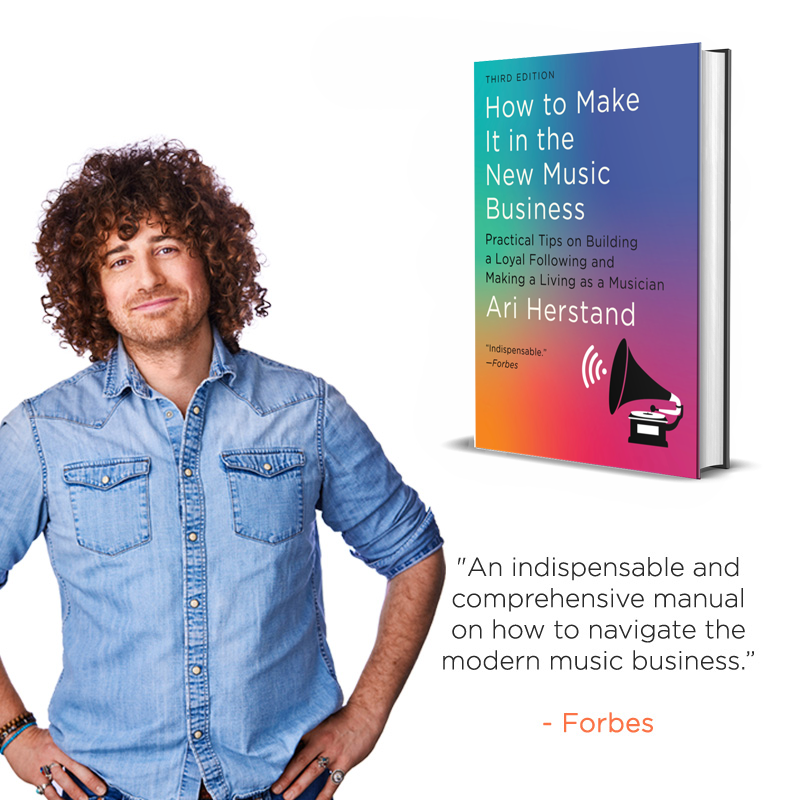
Follow Ari's Take on Instagram @aristake_ and TikTok @aris.take for daily doses of inspiration.
Subscribe on YouTube @aristake
Subscribe to the The New Music Business Podcast
Visit: https://aristake.com
My music:
ariherstand.com
Founded in 2006 in Atlanta, GA, PeachTree Music Group is a multimedia entertainment leader specializing in music production, artist development, and global distribution. Our award winning team, led by CEO Antonio "TopcaT" Randolph, A&Rs Marquan Smith and Daimeial Michel, and Engineer Vertell Hightower, created & creates chart-ready content while upholding industry leading standards of integrity. Key Differentiators Platinum certified production team Strategic major label partnerships Full-service artist development Blockchain powered distribution via DAP.Direct, Specializing in hip-hop, R&B, and pop, PTMG has engineered content generating hundreds of millions to billions of streams, and has secured sync placements with Netflix, ESPN, and Fortune 500 brands. Our 360° Artist Ecosystem combines creative development with innovative technology solutions to build tomorrow's hitmakers. "Where artistry meets accountability."
Subscribe to:
Posts (Atom)